
Speak Now
When it comes to what I know about how the church is harming women, silence is not an option, even when the church is in my hometown.


I was writing this post when the news broke about Alex Pretti’s killing by ICE agents in Minnesota. For those who have voted pro-life for decades, who grew up reading Corrie Ten Boom and Bonhoffer and listening to sermon illustrations decrying the godlessness of Nazis, who claim to believe that every person is made in the image of God, it is time to stand and speak.
I stay silent about more than I should.
I have stayed mostly silent about how two of the four mega-churches in my hometown are pastored by men without seminary degrees. Both of their undergrad/associate degrees are in business. I worry their prominence influences how college kids aiming for ministry think about theological education. If work experience counts as seminary, then why should they bother going to seminary?
I have stayed mostly silent about the steady stream of social media pouring out from one of these churches, influencing thousands and thousands of people both in and outside of Waco.
I tried, for a while, to reach out on social media when I saw something really problematic. It had little impact and I gave up, muting the social media accounts.
I stayed silent.
I almost spoke publicly when several college kids began sending me clips from two episodes of the Becoming Something with Jonathan Pokluda podcast. It is a Waco production, hosted by ministry leaders at Harris Creek Baptist Church, that targets a young adult audience. Jonathan (JP) Pokluda is the lead pastor at Harris Creek and the main voice on the podcast. Becoming Something currently has 383 episodes with 12.9K (average almost 5 star) ratings. The two episodes in question are, “Where are the Godly Girls?” and “Where are the Godly Guys?”
Let me show you some of the transcript from “Where are the Godly Girls?”. To give background, the episode references a New York Times article that quotes me: “In a First Among Christians, Young Men Are More Religious than Young Women,” written by Ruth Graham.
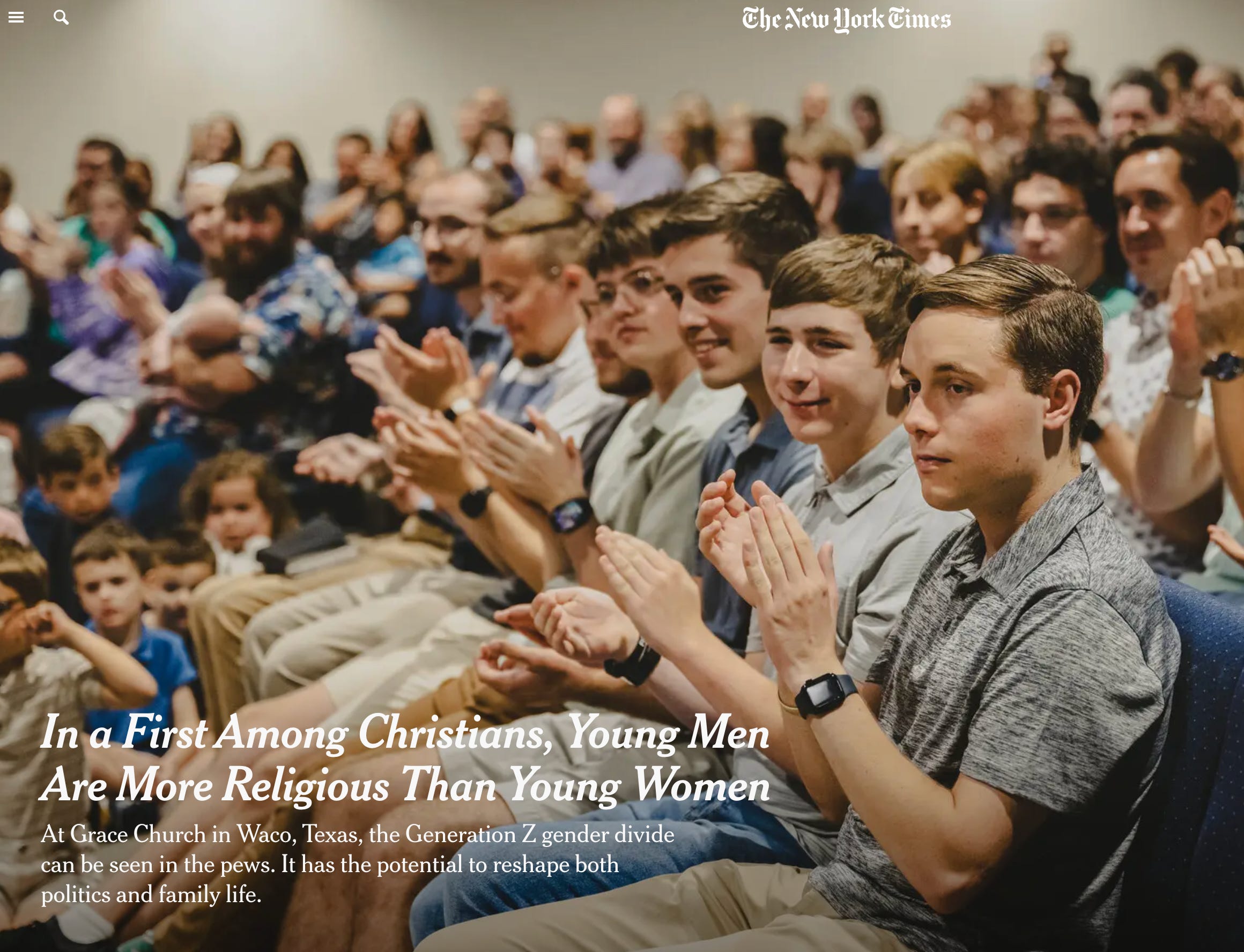
The podcast conversation picks up on a thread in the article that conservative theology has contributed to women leaving church (this is the part of the article that quotes me). As Graham writes, “Young women, it seems, are moving past the debates — and out the church doors.” The podcast episode portrays the reasons for why these women are leaving church as sinful. Just listen.
(Nate) “I think there is something in cultures not necessarily like Waco, Texas, that are telling young adult women, hey, to be a strong, independent woman, like, don’t be a part of the church because they’re going to hold you back to like all that you can be. Which I think is why women are leaving the church in certain areas, because it’s like, man, to be like a strong, independent woman.
(Kathy) Like an empowered woman?
(Nate) Yeah, like, I’m not going to be a part of the church because that’s like they empower men and not women. I think that’s true. Like, you mentioned, like, there’s a political shift with men and women as well.
So, I don’t know. It’s not the culture that we’re in and...
(Kathy) There is, like, the political, cultural lie specifically around women’s bodies. I mean, that’s a huge part of the movement right now, is your body, so it’s your choice. And I think that that empowerment, that female empowerment is like a hard message to turn down if you’re not thinking biblically.”
(Kathy) “So, yeah, I mean, I think I agree with you there. It’s curious, because way ago, I feel like I see so many more godly girls, but I do sense something shifting in culture where it’s like, I don’t want men to tell me what to do with my bodies, or I don’t want men to tell me how to live in marriage, or I don’t want to submit to a man in marriage. And so potentially, they are leaving the church that they feel like is more like patriarchal.
(JP) The whole Women’s Empowerment Movement seems to be making women men, which feels like what he says in Genesis 3 is going to happen. He says, Your desire will be for your husband. That word desire is the same word in Genesis 4, where it says to Cain, Sin is crouching out your door and it desires you.
It desires to rule over you. And it seems like the complementarianism is under attack and being replaced with egalitarianism. I just, I don’t know, man.
I desire better for my sisters.”
From Becoming Something with Jonathan Pokluda: Episode 298: Where Are The Godly Girls?, Dec 23, 2024
According to the episode, women are leaving church because of “women’s empowerment.” They are doing this because they are not thinking biblically.
“Female empowerment is like a hard message to turn down if you are not thinking biblically.” Becoming Something with Jonathan Pokluda, Episode 298: Where are the Godly Girls?
Because they are not thinking biblically, women are resisting the God-given authority of men. Women don’t want men to tell them what to do with their bodies (I presume this is a reference to abortion), they don’t want men to tell them how to live in a marriage, they don’t want to submit to a man in marriage. The problem with women’s empowerment is that it reverses God’s divine order and erases gender roles.
“The whole Women’s Empowerment movement seems to be making women men.” Becoming Something Podcast with Jonathan Pokluda, Episode 298: Where are the Godly Girls?
I’m sure you can see why I almost broke my silence.
On the one hand, why should I expect any better from a Southern Baptist affiliated church with a lead pastor from Watermark Community Church in Dallas, TX? The SBC is complementarian; Watermark is complementarian; many of Waco’s churches are complementarian. Why should I call out this church and this pastor?
On the other hand, I knew this pastor had access to evidence that the claims about “women empowerment” were false. I knew he interacted with faithful Christians who reject complementarianism and yet he allowed the association between rejecting complementarianism and being unbiblical to stand.
Not to mention that Waco, TX, is home of Truett seminary. Truett is one of the few Baptist seminaries that supports the ordination of women and trains women and men equally for pastoral positions. So for a prominent pastor in Waco to publicly equate rejecting complementarianism with being unbiblical and associating it with sin (see the comments about Genesis 3) is something, indeed.
Still, I didn’t speak out.
It wasn’t worth it. I told myself. My job wasn’t to monitor the social media of pastors in my hometown. I told myself. I know lots of people who attend the church and I worried how my speaking might affect my family (again). I didn’t want to deal with the backlash I knew I would receive of people asking me to take it down and painting me as ‘targeting’ a good guy. The fault would lay with me; not the problematic social media posts produced by this pastor. So I stayed silent.
For more than a year.
Two weeks ago I learned about a particular section from JP’s Instagram Live. At first I tried to ignore it. Then I watched it.
I won’t rehash the video. You can read Sheila Gregoire’s response to it here.
The video was a breaking point for me. It is part of a long social media pattern of problematic posts that reduce women to sexual objects. It normalizes a “pornified style of thinking” that affirms men “seeing women as consumable.”
How are women supposed to feel safe in a congregation where a pastor persistently and publicly confesses his continuing sexual desire for other women?
What does it do to young women who hear their pastor persistently and publicly reduce the female body to a sexual object?
What does it do to young men who hear their pastor persistently and publicly normalize wanting to sleep with random women he sees?
What does it do to young men and young women who hear their pastor emphasize how women should not lure men with their bodies (just listen to the episode above; I’ve been afraid to listen to the modesty episode…), or casts an anonymous waitress as a devilish seductress (remember the whole “flannel pastor” thing)?
As Sheila Wray Gregoire writes, “Treating a woman as an object is not victimless. It normalizes a culture where members of the opposite sex are seen as “opportunities” or “sources of temptations” rather than co-laborers in Christ. It makes it harder for women to confront husbands about porn use or the way they look at other women because the pastor himself has normalized it. If even the pastor does it, how can she expect her husband not to?”
The persistent and public objectification of women hurts women. It hurts men. It hurts the church. It does not model Christ-like behavior. It perpetuates rape culture.
I can’t be silent any longer when I see it happening in my hometown.
My hope isn’t to bring down a person; my hope is to bring change. As I wrote in the conclusion to Becoming the Pastor’s Wife, “History has taught me that women, including the wives of pastors, can change the church. I think it is time we change it.”
*For those of you who want to learn more, here are a few book recommendations.
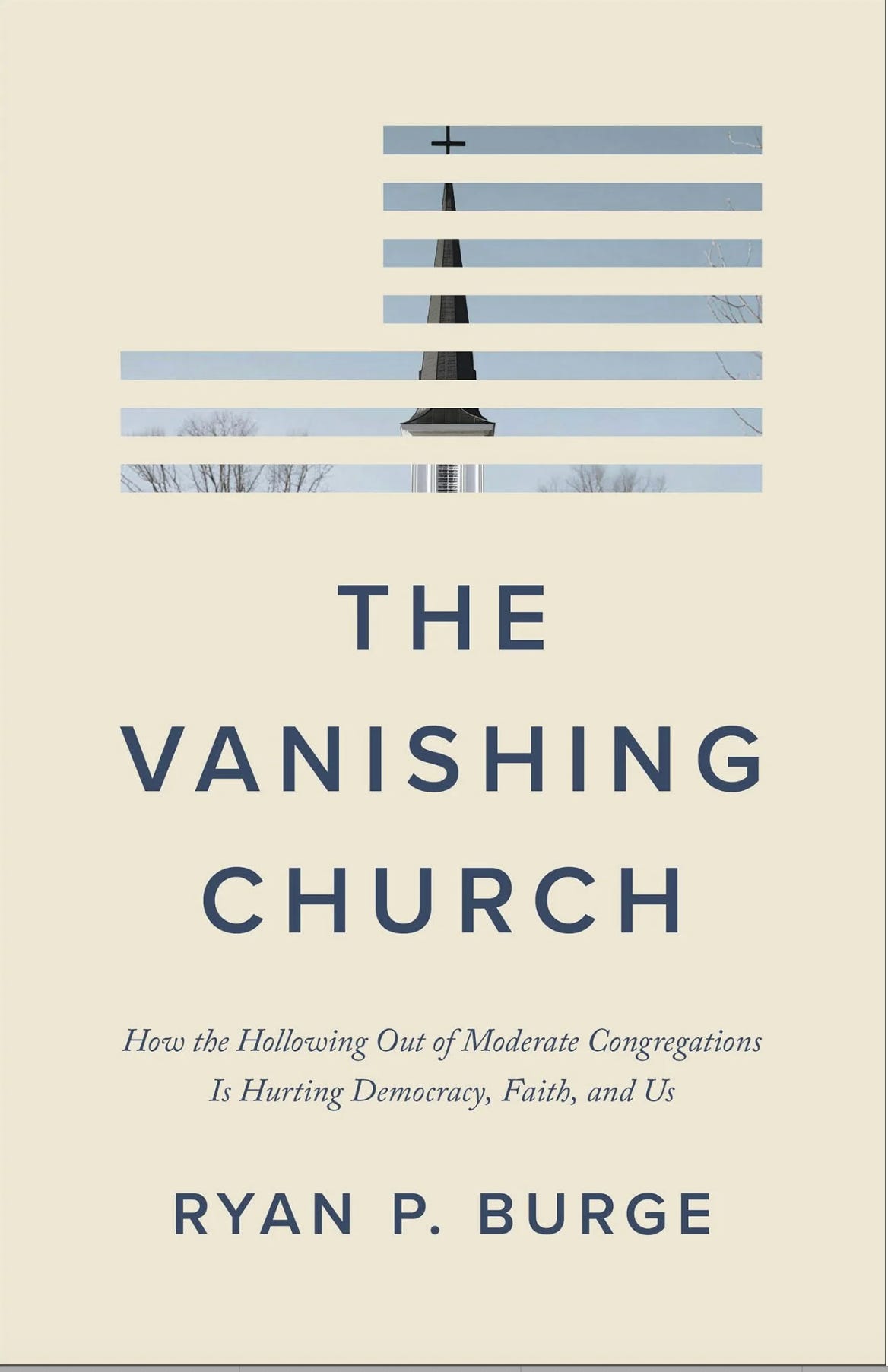
Ryan Burge (quoted in Ruth Graham’s article), The Vanishing Church
Sheila Wray Gregoire, The Great Sex Rescue

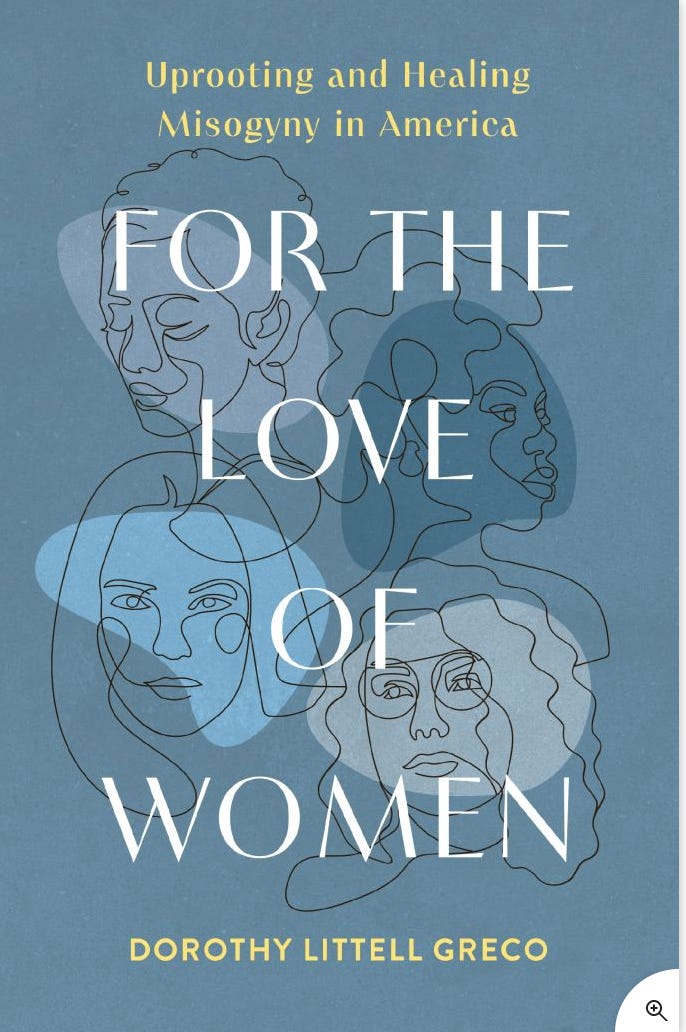
Dorothy Littell Greco, For the Love of Women
and me, The Making of Biblical Womanhood and Becoming the Pastor’s Wife

Thank you for speaking on this. I've been so hung up on that clip, and how he so readily dismisses the Sermon on the Mount by talking about his desire for several other women--his irreverence in response to his wife's protest to him speaking like that about other women. And if that's what he is comfortable posting? I hurt for her.
I actually found you and your work because of that NYT article. I tracked down all of your content that I could find, read The Making of Biblical Womanhood in 2 days, and then re-read it. Thank you for speaking on these issues. It gives direction and wisdom on things that feel extremely turbulent and disconcerting. I felt completely lost and confused around the things I have experienced in my church, marriage, and faith journey. The context that you bring to these conversations is invaluable and grounding.